Good Enough Ships. Perfect Doesn't. Here's What That's Costing Your Team.
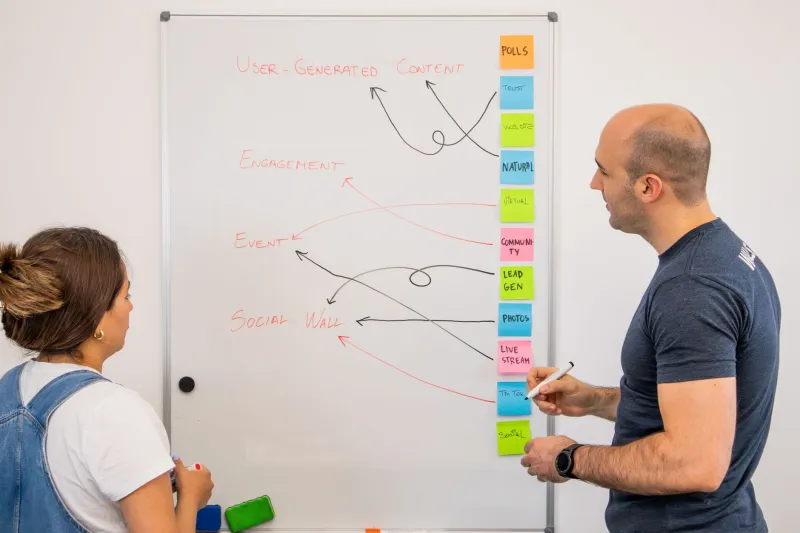
There's a meeting that happens in nearly every growing company. Someone pulls up the project management tool, squints at the dashboard, and says: "This would work so much better if we just reorganized the pipeline stages." Forty-five minutes later, the whole team is debating color labels, and the actual project is still sitting untouched.
Sound familiar? That's the customization trap — and it's eating your team alive.
The Setup That Never Gets Set Up
Here's the thing about modern productivity tools: they're almost too flexible. Notion lets you build a database inside a database inside a template. Airtable gives you 47 field types. Zapier has thousands of triggers. Monday.com has more views than a Netflix library. And every single one of those options is an invitation to spend another hour optimizing instead of executing.
A study from Productiv found that the average enterprise uses over 200 SaaS apps — and that number keeps climbing. But tool count isn't the real problem. The real problem is what happens after you adopt a tool: the endless configuration cycle that follows.
Teams get stuck in what researchers call "tinkering loops" — iterative adjustments to workflows that feel productive but don't actually move any needle on output. You're busy, but you're not building anything. You're tuning the engine instead of driving the car.
What Customization Actually Costs (In Real Numbers)
Let's get specific, because this stuff is easy to wave away until you see it in black and white.
Say your team of 10 spends an average of 90 minutes per week fiddling with tool configurations — updating automations, rebuilding templates, troubleshooting integrations, or debating workflow structure in Slack. That's 15 hours a week across the team. At an average US knowledge worker salary of around $85,000 annually, you're burning roughly $620 worth of salary time every single week on setup that never quite finishes.
Over a year? That's north of $32,000 — gone. Not on bad hires, not on wasted software subscriptions, but on the act of arranging the software you already paid for.
And that's the conservative estimate. It doesn't account for the opportunity cost of delayed launches, missed deadlines, or the compounding drag that comes when your team's best thinkers are spending cognitive energy on tool architecture instead of actual strategy.
Why Smart Teams Fall Into This Trap
It's not laziness. It's not incompetence. If anything, the teams most obsessed with perfect setups are often the most talented and conscientious ones. That's part of what makes this so insidious.
High performers tend to believe that a better system will unlock better results — and they're not entirely wrong. A well-structured workflow does compound over time. But there's a critical inflection point where continued optimization stops returning value and starts consuming it.
The psychology here is worth noting: customizing a tool gives you the feeling of progress without the risk of actual execution. Shipping a project means it can fail. Rebuilding your CRM pipeline stages? That's safe. It feels productive. It looks like work. But it's a form of procrastination wearing a very convincing disguise.
The 80% Framework: When to Stop Tweaking and Start Shipping
So how do you know when your setup is good enough? Here's a simple framework we call the 80% Rule:
Ask yourself: Does this workflow handle 80% of our use cases without friction?
If yes — ship it. Document it. Move on.
The remaining 20% of edge cases can be handled manually, addressed later, or patched with a lightweight workaround. That 20% does not need to be automated, templated, or color-coded before your team can start using the system.
Here's why this matters at scale: a solution deployed at 80% quality in Week 1 starts generating real productivity data immediately. You learn what actually breaks. You learn what your team actually uses. And your future optimizations are based on real behavior — not hypothetical scenarios you brainstormed in a two-hour planning session.
A "perfect" solution that ships in Week 6 has already cost you five weeks of compounding output. And odds are, it still won't be perfect.
Practical Ways to Break the Customization Cycle
Set a configuration budget. Before you start building out a new tool or workflow, decide in advance how many hours you're willing to spend on setup. When the budget runs out, you ship what you have. No extensions.
Separate builders from users. If the same people responsible for executing work are also responsible for maintaining the tools, you've created a conflict of interest. One person or a small ops function should own tool configuration — everyone else should be protected from the tinkering loop.
Run a "good enough" audit. Pick your three most-used tools and ask: what percentage of features does your team actually use week to week? If it's under 30%, you're probably over-configured and under-utilized. Simplify.
Default to native before custom. Before you build a custom automation or integration, check whether the tool already does it natively. Teams routinely spend hours building Zapier workflows for things that exist as built-in features — they just didn't look hard enough first.
Create a "parking lot" for optimization ideas. When someone wants to improve a workflow, they add it to the parking lot. Once a month, the team reviews the list and picks one or two improvements to actually implement. Everything else waits. This channels the optimization instinct without letting it run wild.
The Compounding Case for Shipping Fast
Here's the flip side of all those cost numbers: every week you ship a working solution — even an imperfect one — you're building momentum. Your team gets reps. You identify real friction points. You start improving based on evidence.
That compounds. A team that ships 20% faster doesn't just save 20% of their time — they complete more cycles, learn faster, and build institutional knowledge that makes the next project even faster. Over a year, that gap between the "ship it" team and the "perfect it" team becomes enormous.
Brixo's whole philosophy is built around this idea: smarter work isn't always more elaborate work. Sometimes it's the discipline to draw a line, call something done, and go build the actual thing you set out to build.
Your tools should work for you. The moment you're working for your tools, something has gone sideways.
The Bottom Line
Perfection is expensive. Not in an abstract, inspirational-poster kind of way — in a real, calculable, salary-burning way. The teams winning right now aren't the ones with the most elegant automation setups. They're the ones who got 80% there and spent the rest of their time shipping.
Stop perfecting. Start executing. The compounding returns are waiting on the other side.